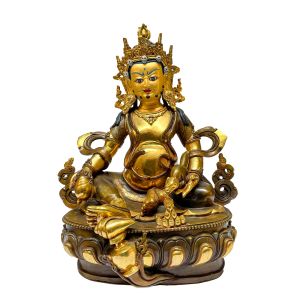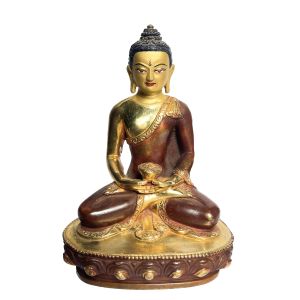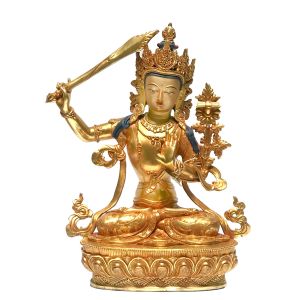
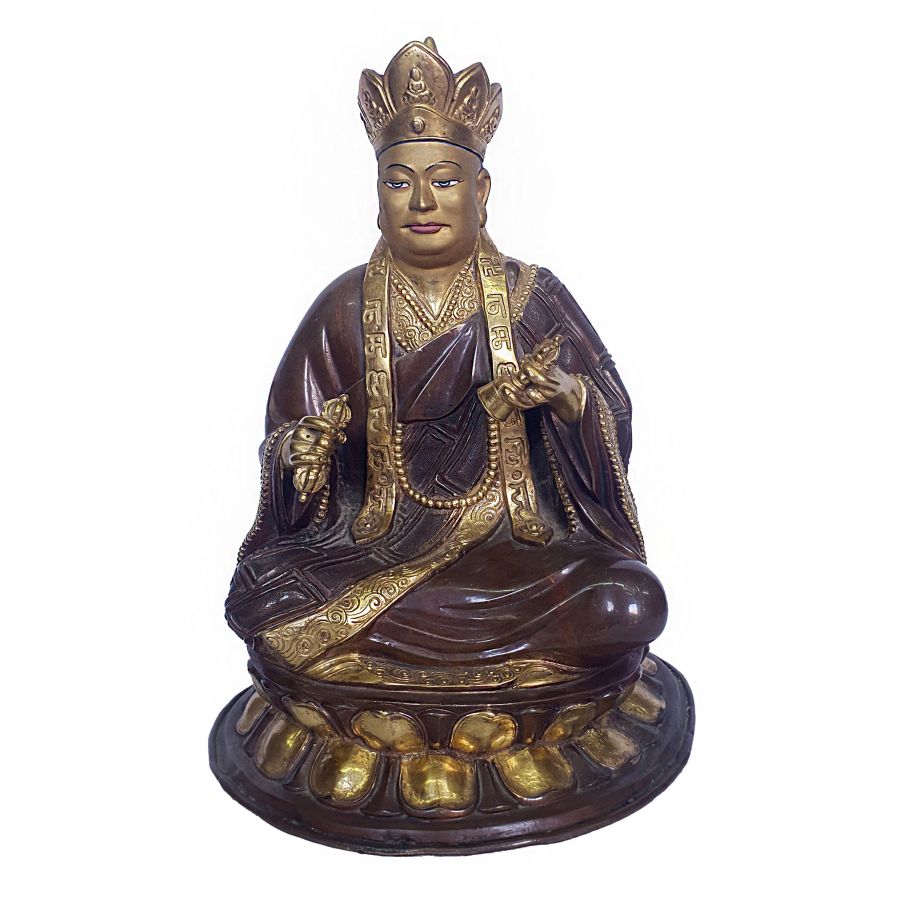
30 + year Old , Statue of karmapa, Partly Gold plate
| Seller | Handmade Handicraft |
|---|---|
| Product Tags | Handmade, Handicraft, Craft, Statue, Gold Plated, Karmapa, Karmapa Statue, Statue of Karmapa |
| UK Size | 4 |
| Seller | Admin |
| Seller | Handmade Handicraft |
|---|---|
| Product Tags | Handmade, Handicraft, Craft, Statue, Gold Plated, Karmapa, Karmapa Statue, Statue of Karmapa |
| UK Size | 4 |
| Seller | Admin |
30 + year Old Statue of karmapa Partly Gold plate
Weight: 4 kg
Size: 24x18x18 cm
Material: Copper and Gold
About the Product
Finishing: Partly Gold Plated
Detailed Description of Mercury Gilding - Source wikipedia
Fire-gilding or Wash-gilding is a process by which an amalgam of gold is applied to metallic surfaces the mercury being subsequently volatilized leaving a film of gold or an amalgam containing 13 to 16% mercury. In the preparation of the amalgam the gold must first be reduced to thin plates or grains which are heated red-hot and thrown into previously heated mercury until it begins to smoke. When the mixture is stirred with an iron rod the gold is totally absorbed. The proportion of mercury to gold is generally six or eight to one. When the amalgam is cold it is squeezed through chamois leather to separate the superfluous mercury; the gold with about twice its weight of mercury remains behind forming a yellowish silvery mass with the consistency of butter.
When the metal to be gilded is wrought or chased it ought to be covered with mercury before the amalgam is applied that this may be more easily spread; but when the surface of the metal is plain the amalgam may be applied to it directly. When no such preparation is applied the surface to be gilded is simply bitten and cleaned with nitric acid. A deposit of mercury is obtained on a metallic surface using quicksilver water a solution of mercury(II) nitrate the nitric acid attacking the metal to which it is applied and thus leaving a film of free metallic mercury.
The amalgam is equally spread over the prepared surface of the metal the mercury is then sublimed by heat just sufficient for that purpose; for if it is too great part of the gold may be driven off or it may run together and leave some of the surface of the metal bare. When the mercury has evaporated which is known by the surface having entirely become of a dull yellow color the metal must undergo other operations by which the fine gold color is given to it. First the gilded surface is rubbed with a scratch brush of brass wire until its surface is smooth.
It is then covered with gilding wax and again exposed to fire until the wax is burnt off. Gilding wax is composed of beeswax mixed with some of the following substances: red ochre verdigris copper scales alum vitriol and borax. By this operation the color of the gilding is heightened and the effect seems to be produced by a perfect dissipation of some mercury remaining after the former operation. The gilt surface is then covered over with potassium nitrate alum or other salts ground together and mixed into a paste with water or weak ammonia. The piece of metal thus covered is exposed to heat and then quenched in water.
By this method its color is further improved and brought nearer to that of gold probably by removing any particles of copper that may have been on the gilt surface. This process when skillfully carried out produces gilding of great solidity and beauty but owing to the exposure of the workmen to mercurial fumes it is very unhealthy. There is also much loss of mercury to the atmosphere which brings extremely serious environmental concerns as well.
This method of gilding metallic objects was formerly widespread but fell into disuse as the dangers of mercury toxicity became known. Since fire-gilding requires that the mercury be volatilized to drive off the mercury and leave the gold behind on the surface it is extremely dangerous. Breathing the fumes generated by this process can quickly result in serious health problems such as neurological damage and endocrine disorders since inhalation is a very efficient route for mercuric compounds to enter the body. This process has generally been supplanted by the electroplating of gold over a nickel substrate which is more economical and less dangerous.
Fire Gold Plating In Nepal
Face: Gold Painted
Protecting the Face
As the face is painted it is highly recommended that the face of the statue is to be greatly taken care of as it requires a very professional and skilled face artist to repair the face of dirt and damages. Commonly to protect it from damage the statue with painted face is placed under a glass box and it is always covered with a cotton face mask if it has to be moved
Video of Face Painting
Making Process: Lost-Wax System
Karmapa: Brief Introduction
The Karmapa (honorific title His Holiness the Gyalwa (རྒྱལ་བ་ Victorious One) Karmapa more formally as Gyalwang (རྒྱལ་དབང་ཀརྨ་པ་ King of Victorious Ones) Karmapa and informally as the Karmapa Lama) is the head of the Karma Kagyu the largest sub-school of the Kagyu (བཀའ་བརྒྱུད Wylie: bka' brgyud) itself one of the four major schools of Tibetan Buddhism.
The historical seat of the Karmapas is Tsurphu Monastery in the Tolung valley of Tibet. The Karmapa's principal seat in exile is the Dharma Chakra Centre at Rumtek Monastery in Sikkim India. His regional monastic seats are Karma Triyana Dharmachakra in New York and Dhagpo Kagyu Ling in Dordogne France.
Due to a controversy within the Karma Kagyu school over the recognition process the identity of the current 17th Karmapa is disputed by some. Origin of the lineageDusum Khyenpa 1st Karmapa Lama (Wylie: Dus gsum Mkhyen pa 1110-1193) was a disciple of the Tibetan master Gampopa. A talented child who studied Buddhism with his father from an early age and who sought out great teachers in his twenties and thirties he is said to have attained enlightenment at the age of fifty while practicing dream yoga. He was henceforth regarded by the contemporary highly respected masters Shakya Śri and Lama Shang as the Karmapa a manifestation of Avalokiteśvara whose coming was predicted in the Samadhiraja Sutra and the Laṅkāvatāra Sūtra.
The source of the oral lineage traditionally traced back to the Buddha Vajradhara was transmitted to the Indian master of mahamudra and tantra called Tilopa (989-1069) through Naropa (1016-1100) to Marpa Lotsawa and Milarepa. These forefathers of the Kagyu (Bka' brGyud) lineage are collectively called the "Golden Rosary".
Karma Pakshi 2nd Karmapa Lama (1204-1283) is often said to be the first person ever recognized and empowered as a tulku (Wylie: sprul sku) a reincarnated lama (bla ma)Black CrownThe Karmapas are the holders of the Black Crown (Wylie: Zhwa-nag) and are thus sometimes known as "the Black Hat Lamas". This crown (Wylie: rang 'byung cod pan "self-arisen crown") is traditionally said to have been woven by the dakinis from their hair and given to the Karmapa in recognition of his spiritual realization. The physical crown displayed by the Karmapas was offered to Deshin Shekpa 5th Karmapa Lama by the Yongle Emperor of China as a material representation of the spiritual one.
The crown was last known to be located at Rumtek Monastery in Sikkim the last home of the 16th Karmapa although that location has been subject to some upheaval since 1993 causing some to worry as to whether or not it is still there. An inventory of items remaining at Rumtek is purported to be something the Indian government is going to undertake in the near future.List of KarmapasDusum Khyenpa (དུས་གསུམ་མཁྱེན་པ་) (1110-1193)
Karma Pakshi (ཀརྨ་པཀྵི་) (1204-1283)
Rangjung Dorje (རང་འབྱུང་རྡོ་རྗེ་) (1284-1339)
Rolpe Dorje (རོལ་པའི་རྡོ་རྗེ་) (1340-1383)
Deshin Shekpa (དེ་བཞིན་གཤེགས་པ་)(1384-1415)
Thongwa Donden (མཐོང་བ་དོན་ལྡན་) (1416-1453)
Chodrak Gyatso (ཆོས་གྲགས་རྒྱ་མཚོ་) (1454-1506)
Mikyo Dorje (མི་བསྐྱོད་རྡོ་རྗེ་) (1507-1554)
Wangchuk Dorje (དབང་ཕྱུག་རྡོ་རྗེ་) (1556-1603)
Choying Dorje (ཆོས་དབྱིངས་རྡོ་རྗེ་) (1604-1674)
Yeshe Dorje (ཡེ་ཤེས་རྡོ་རྗེ་) (1676-1702)
Changchub Dorje (བྱང་ཆུབ་རྡོ་རྗེ་) (1703-1732)
Dudul Dorje (བདུད་འདུལ་རྡོ་རྗེ་) (1733-1797)
Thekchok Dorje (ཐེག་མཆོག་རྡོ་རྗེ་) (1798-1868)
Khakyab Dorje (མཁའ་ཁྱབ་རྡོ་རྗེ་) (1871-1922)
Rangjung Rigpe Dorje (རང་འབྱུང་རིག་པའི་རྡོ་རྗེ་) (1924-1981)
Ogyen Trinley Dorje (ཨོ་རྒྱན་འཕྲིན་ལས་རྡོ་རྗེ།) (b. 1985) or Trinley Thaye Dorje (ཕྲིན་ལས་མཐའ་ཡས་རྡོ་རྗེ།)(b. 1983)