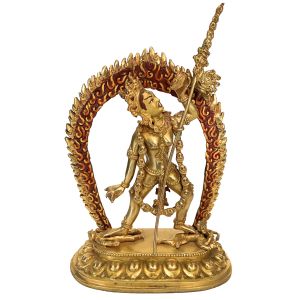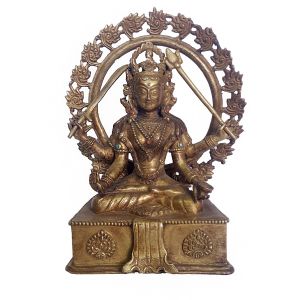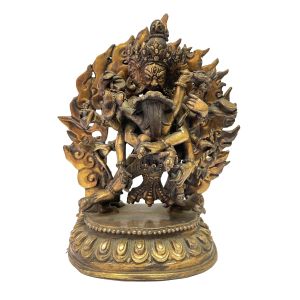
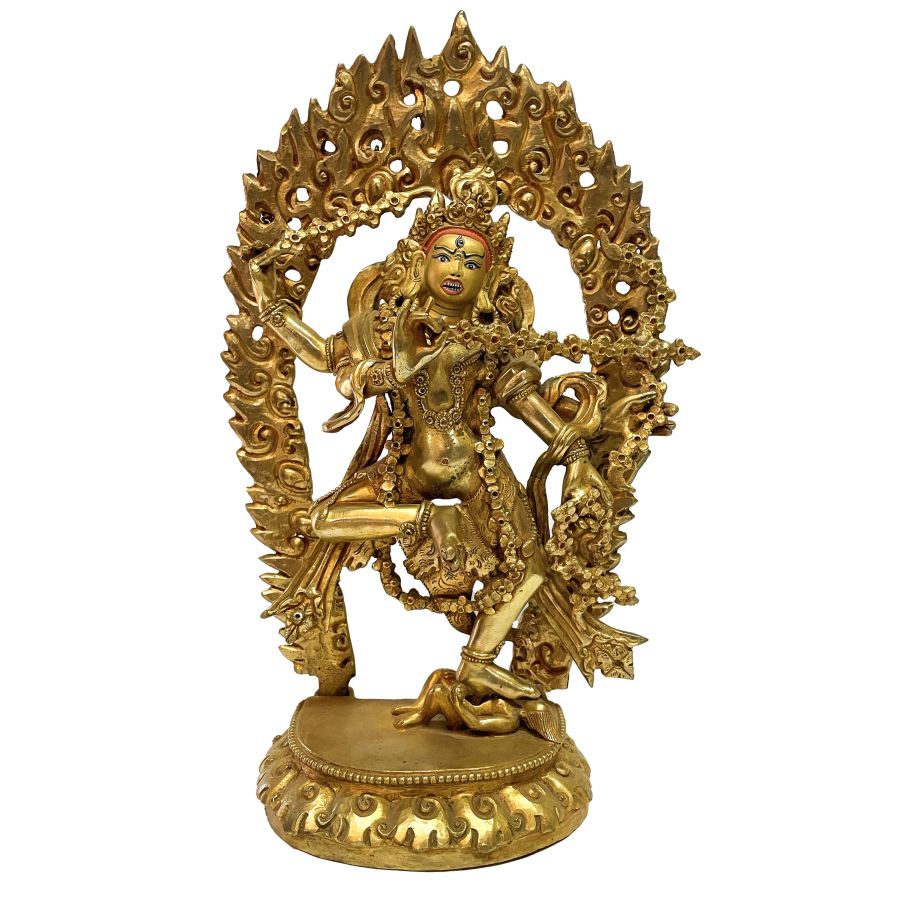
Nepali Handmade Statue Of Kurukulla Yogini, Full Fire Gold Plated
| Seller | Handmade Handicraft |
|---|---|
| Product Tags | Statue, Handmade, handicraft, Crafts, Religious, Gold Plated Statue, Kurukulla Yogini |
| UK Size | 4 |
| Seller | Admin |
| Seller | Handmade Handicraft |
|---|---|
| Product Tags | Statue, Handmade, handicraft, Crafts, Religious, Gold Plated Statue, Kurukulla Yogini |
| UK Size | 4 |
| Seller | Admin |
Nepali Handmade Statue Of Kurukulla Yogini Full Fire Gold Plated
Weight: 2.14 kg
Size: 25x15x7 cm
Material: Copper Gold Plated
About the Product
Making Process: Lost-Wax System
Finishing: Full Fire Gold Gilded
Detailed Description of Mercury Gilding - Source wikipedia
Fire-gilding or Wash-gilding is a process by which an amalgam of gold is applied to metallic surfaces the mercury being subsequently volatilized leaving a film of gold or an amalgam containing 13 to 16% mercury. In the preparation of the amalgam the gold must first be reduced to thin plates or grains which are heated red-hot and thrown into previously heated mercury until it begins to smoke. When the mixture is stirred with an iron rod the gold is totally absorbed. The proportion of mercury to gold is generally six or eight to one. When the amalgam is cold it is squeezed through chamois leather to separate the superfluous mercury; the gold with about twice its weight of mercury remains behind forming a yellowish silvery mass with the consistency of butter.
When the metal to be gilded is wrought or chased it ought to be covered with mercury before the amalgam is applied that this may be more easily spread; but when the surface of the metal is plain the amalgam may be applied to it directly. When no such preparation is applied the surface to be gilded is simply bitten and cleaned with nitric acid. A deposit of mercury is obtained on a metallic surface using quicksilver water a solution of mercury(II) nitrate the nitric acid attacking the metal to which it is applied and thus leaving a film of free metallic mercury.
The amalgam is equally spread over the prepared surface of the metal the mercury is then sublimed by heat just sufficient for that purpose; for if it is too great part of the gold may be driven off or it may run together and leave some of the surface of the metal bare. When the mercury has evaporated which is known by the surface having entirely become of a dull yellow color the metal must undergo other operations by which the fine gold color is given to it. First the gilded surface is rubbed with a scratch brush of brass wire until its surface is smooth.
It is then covered with gilding wax and again exposed to fire until the wax is burnt off. Gilding wax is composed of beeswax mixed with some of the following substances: red ochre verdigris copper scales alum vitriol and borax. By this operation the color of the gilding is heightened and the effect seems to be produced by a perfect dissipation of some mercury remaining after the former operation. The gilt surface is then covered over with potassium nitrate alum or other salts ground together and mixed into a paste with water or weak ammonia. The piece of metal thus covered is exposed to heat and then quenched in water.
By this method its color is further improved and brought nearer to that of gold probably by removing any particles of copper that may have been on the gilt surface. This process when skillfully carried out produces gilding of great solidity and beauty but owing to the exposure of the workmen to mercurial fumes it is very unhealthy. There is also much loss of mercury to the atmosphere which brings extremely serious environmental concerns as well.
This method of gilding metallic objects was formerly widespread but fell into disuse as the dangers of mercury toxicity became known. Since fire-gilding requires that the mercury be volatilized to drive off the mercury and leave the gold behind on the surface it is extremely dangerous. Breathing the fumes generated by this process can quickly result in serious health problems such as neurological damage and endocrine disorders since inhalation is a very efficient route for mercuric compounds to enter the body. This process has generally been supplanted by the electroplating of gold over a nickel substrate which is more economical and less dangerous.
Fire Gold Plating In Nepal
Kurukulla: Brief Introduction
Kurukullā (Tibetan: ཀུ་རུ་ཀུ་ལླཱ་; also Tibetan: རིག་བྱེད་མ་ Wylie: rig byed ma "Knowledge/magic/vidyā Woman" Chinese: 咕嚕咕列佛母 "Mother-Buddha Kuru[kullā]" or Chinese: 作明佛母 "Knowledge-Causing Mother-Buddha") is a female peaceful to semi-wrathful Yidam in Tibetan Buddhism particularly associated with rites of magnetization or enchantment. Her Sanskrit name is of unclear origin
Kurukullā is a goddess whose body is usually depicted in red with four arms holding a bow and arrow made of flowers in one pair of hands and a hook and noose of flowers in the other pair. She dances in a Dakini-pose and crushes the asura Rahu (the one who devours the sun). According to Hindu astrology Rahu is a snake with a demon head (Navagraha) who represents the ascending lunar node.
She is considered either an emanation of Amitābha one of Tara's forms or a transformation of Heruka.HistoryKurukullā was likely an Indian tribal deity associated with magical domination. She was assimilated into the Buddhist pantheon at least as early as the Hevajra Tantra which contains her mantra. Her function in Tibetan Buddhism is the "red" function of subjugation. Her root tantra is the Arya-tara-kurukulle-kalpa (Practices of the Noble Tara Kurukullā).[3] It was translated by Tsutrim jeya a disciple of Atiśa.
Mantra of Kurukulla
The essential mantra of Kurukullā is Oṁ Kurukulle Hrīḥ Svāhā (Tibetan: ༀ་ཀུ་རུ་ཀུ་ལླེ་ཧྲཱིཿསྭཱ་ཧཱ).
"